111111111111111111111
Thursday, November 26, 2020

Thursday, November 29, 2018
Bitmain 7nm S15 Bitcoin Cloud Mining Contract in Stock
OXBTC launches a new Bitcoin cloud mining contract BTC-S15 with higher profits and lower electricity fee. The contract runs Antminer 7nm S15 with high profits. 5 years contract period owns continuous and stable profits. The electricity fee is $0.1096/THS/Day, drops 36%.
Three Advantages of BTC-S15:
1. Run Antminer S15 with Higher Profits
BTC-S15 hashrate contract runs 7nm miner: Antminer S15. Compared with S9, S15 owns 70W/THs of actual efficiency and 28TH/s of hashrate with higher performance and lower energy consumption.
2. 5 Years Mining Period with Continuous and Stable Profits
After you purchase BTC-S15 contract, your mining services will run for 5 years period - even in cases where your daily mining reward falls below the Maintenance Fees. This way, your daily income will be more continuous and stable.
3. Electricity Fee: $0.1096/THS/Day, Drops 36%
Based on powerful performance of S15, electricity fee of BTC-S15 contract drops to $0.1096/THS/day. Compared with S9 contract, new contract will save 36% electricity fee for you. The maintenance fees will be far lower than other cloud hashrate products in the market.
Contract Details:
• Price: $60.90/THS
• Management Fee: 5%
• Electricity Fee: $0.1096/THS/天(Drops 36%)
• Efficiency: 70W/T
• Contract Peroid: 5 Years
• Inventory: 1400THS
• Delivery Time: Next day after purchase
OXBTC has been providing reliable cloud mining services for global 600,000 customers for 4 years! And we will continue to deliver even better cloud mining products and better customer services in the future.
Get first-hand information from:
Telegram: https://t.me/oxbtcofficial
Facebook: OXBTC (http://www.facebook.com/oxbitcoin/)
Email: support@oxbtc.com
Website: www.oxbtc.com
Monday, November 26, 2018
OXBTC Set Cloud Minig Innovation in Bear Market
Recently, the price of bitcoin has continued to fall. As of the current time, the price of bitcoin was 3,642 US dollars on November 27, 2018. The price of bitcoin plunged 81% from the highest point of 19,886 US dollars last year, and the market value evaporated by 263 billion US dollars. For all new users of the 2018, they experienced several consecutive plunge and suffered heavy losses. For the users of mining, it is even more difficult.
It is reported that a number of cloud mining platforms have been declared closed because the Bitcoin cloud mining contract has been unable to pay electricity and management fees for ten consecutive days. In response to this situation, OXBTC as the old-fashioned cloud mining platform established in China in 2014, launched a policy of extending the contract period, extending the observation period of contract closure from 10 days to 90 days. If the contract revenue is higher than the electricity fees on any day within 90 days, the contract can be resumed and the cloud mining contract is still valid. The risk caused by the large fluctuations in the currency price is greatly reduced.
The contract period of a general cloud mining contract is permanent. As we all know, the normal life of a mining machine is generally about 2 years, and the physical life will end. However, another risk is not ruled out, that is, the currency price has plummeted. Therefore, many cloud mining platforms will have an additional conditional cloud mining contract for 10 consecutive days of actual income insufficient to offset the electricity bill, then the contract is terminated.
OXBTC knows the risk of currency price fluctuations in the near future. In order to protect the rights and interests of users, it has created a 90-day observation period: when the mining revenue is less than the electricity expenses, the contract will suspend mining; when this situation occurs continuously for 90 days at the time, the contract will be terminated. However, if the mining revenue is higher than the electricity bill within 90 days, the contract is still valid.
The world moves and on, 90 days is enough for the market to give a direction, and users have time to make adjustments and decisions. As someone said, energy should not be concentrated on predictions. No one can predict 100%, but focus on reaction. That is what happens, how do I react. That is the strategy. Develop a strategy and then execute it. If the strategy is wrong, modify the strategy.
In this round of bear market, there are many platforms disappeared and shutting down. First, the ICO project side disappeared, and the famous star project consumer chain (CDC) is the most famous one. The founder Yang Ning is a well-known angel investor in the Internet industry. After selling in peak price, he confessed his fault but told that cryptocurrency was not reliable, and treat the investors are mentally retarded. Then there is the exchange disappeared, take the innocent investors’ Money away. There are very few platforms that can really stay and do things. After this round of bear market, the companies that still survive will surely become the stars of the next round of bull market.
In 1926, the Russian economist Nikolai Kondratiev, after analyzing a large number of statistics of Britain, France, the United States, Germany and the world economy, discovered a long period of 50-60 years in the developed commodity economy, and that is called super cycles. The super cycles is divided into four phases, rising, prospering, recession, and depression. However, in the cryptocurrency circle, this time period may be shorter. After the depression period, will spring be far behind?
Is It the Right Time to Start Bitcoin Mining in Bear Market?
Up to now, it reached the highest bitcoin price of 20,000 US dollars last year, the entire cryptocurrency market has been intermittently falling for nearly 10 months, we continue to see a lot of project, media, exchanges, etc. faded out one by one. The once-rich cryptocurrency ecology has long been deplorable: the project has long been unable to launch an ICO, the trading volume of the exchange is bleak, and only some of the miners who remain are still looking at their own profits.
Once mining has once again become the final value support for the entire industry, it has become the final leg that can prove the existence of the industry; for any investor who still wants to continue to make money in the cryptocurrency, mining should not be ignored for current investment potential. And as the market has entered the bottom area, the investment dividend for mining has once again become clear.
The best way to invest in Bitcoin: fixed investment or mining
There are two main types in Bitcoin investments:
1. Long-term investors:
People who agree with the long-term value of Bitcoin are generally based on fixed investment (fixed investment refers to investing in a fixed period, such as buying a certain amount of bitcoin per month). Fixed investment can spread the risk of investment on average, and is extremely suitable for investment products such as Bitcoin and Ethereum.
2. Short-term investors:
For investors with a certain level of trade, it is necessary to have a higher level to ensure stable profitability.
3. Ordinary investors:
Bitcoin mining, mining has a large threshold, involving many factors, so many investors will choose to invest in mining by purchasing cloud computing (cloud mining) products.
So for investors, they will think about a question: which one can earn higher profits? Fixed investment of buying bitcoin or investment of mining?
The general conclusion is that when the price of the currency is constant, there is no difference between mining and fixed investment; when the price of the currency rises steadily, the fixed investment is better than mining; when the price of the currency rises, the mining is better than the fixed investment. The theory is the same, but in the actual investment behavior, although the fixed investment is stable, but the investors generally have problems that are difficult to implement continuously: 1. Lack of time and energy to execute the fixed investment; 2. Because of the aversion to loss, people always want to wait for lower price, which has led to the inability to implement the fixed investment strategy; 3. In the market fluctuations, it leads to greater losses in the short-term speculation . But Mining, investment quit is more troublesome, like a mandatory fixed investment method, often can obtain more sustained and stable income. It is for this reason that we often see that a large number of large-capital holders are mining origins. Therefore, for retail investors, if they can allocate fixed investment and mining investment into their own portfolios, the relative risks are far lower than purely buying bitcoins.
How retail investors participate in mining?
In recent years, as a low-threshold mining investment, cloud mining has become a common action for more and more cryptocurrency investors; For cloud mining platform, Genesis-mining and OXBTC are recommend as old brand platforms with more than one million users.
In essence, cloud mining is a mining investment tool that splits the mining rights of the mining machine. The user does not need to purchase the whole machine, and does not need to operate the mining machine, completely eliminating the capital and technical threshold for the general user to invest in mining. In terms of revenue, because the cloud mining saves the troubles of mining machine operation and maintenance, although the price is slightly higher than that of the mining machine, the income is more stable (the cloud mining platform generally distributes the proceeds according to the theoretical value. It avoids the loss of revenue caused by faults such as the drop of the mining machine).
The key to investing in cloud computing power is:
1. Choose a trusted platform to avoid the risk of platform disappeared after purchase; it is generally recommended to choose an old-age cloud mining platform with a long running history;
2, Price and maintenance costs need to have cost-effective; under the premise of the credit and performance capabilities of the platform, the lower the external selling price of the cloud mining contract, the more investment advantage.
At present, after the price of mining machines has fallen to the bottom of the market, the price of some cloud mining products in the market has also bottomed out; recently, the world-renowned cloud mining platform OXBTC (oxbtc.com), it has dropped the contract price to 26.5 US dollars per TH/s, the unit cost even exceeds the direct purchase of a mining machines.
Based on the judgment of the current market conditions and confidence in the cryptocurrency market, mining investment may have entered a new dividend period. In addition to the fixed investment in bitcoin, retail investors are also equipped with a certain amount of cloud mining products. Very valuable investment options!
Monday, July 9, 2018
PandaMiner B3 Pro (8G) vs. PandaMiner B3 Pro (4G), Which One to Choose?
PandaMiner B3 Pro (8G) version is now available on our official website. Compared to the original product (PandaMiner B3 Pro), the memory size has been increased from the original 4G to the existing 8G version. Here I would like to introduce you some difference between PandaMiner B3 Pro (8G) and PandaMiner B3 Pro (4G).
1. Stability
The memory frequency in the graphics card mining is the main factor affecting the computing power. The miners will change the graphics bios to reduce the power consumption and increase the computing power. The general change is to reduce the GPU core frequency & increase the memory frequency, and reduce the power consumption limit. In other words, the impact of the GPU of the mine card is not very large, on the contrary, the memory is working under extreme overclocking. Although there is not much improvement in hashrate compared to the B3 Pro (4G) , the mining stability B3 Pro (8G) will be greatly improved.
2. Price
PandaMiner B3 Pro (4G): $2666 ( PSU and shipping cost included)
PandaMiner B3 Pro (8G): $2699 (PSI and shipping cost included)
3. Link:
PandaMiner B3 Pro (4G): https://pandaminer.com/product/product_detail/30
PandaMiner B3 Pro (8G): https://pandaminer.com/product/product_detail/34
4. Apperance
There are no obvious difference in apperance between two miners.
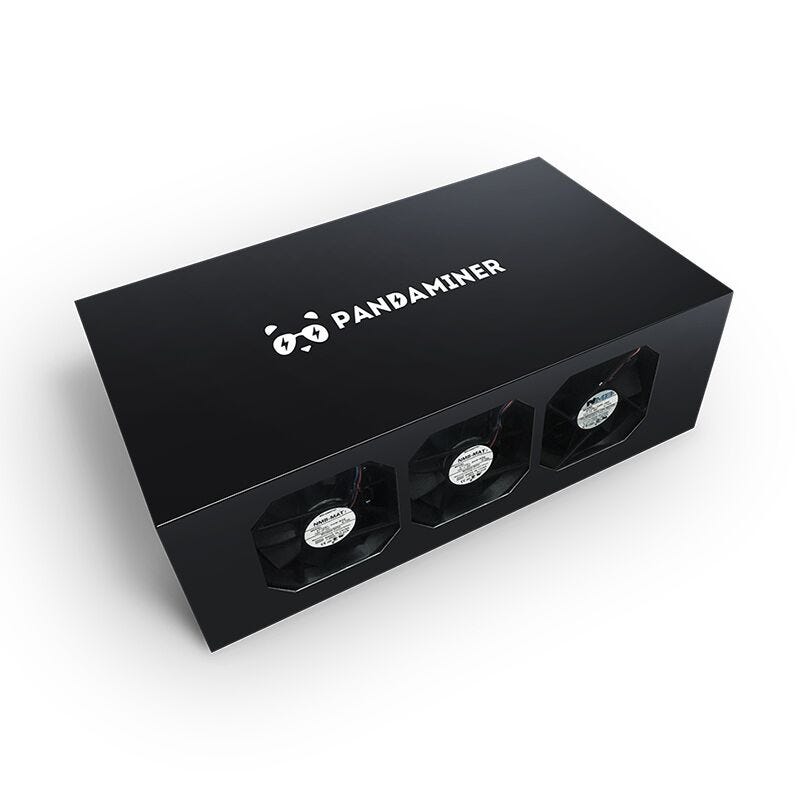
Except for mining stability, there are actually no obvious difference between PandaMiner B3 Pro (8G) and PandaMiner B3 Pro (4G) in other aspects. Therefore, choose 8G or 4G, it’s depended on your actual needs. Whether you choose 4G or 8G, PandaMiner Team will provide you the same service to ensure you have a great shopping exprience.
For more details, welcome to visit our official websie: https://pandaminer.com/.
Thursday, July 5, 2018
Bitcoin Mining Guide in Bear Market of 2018
Speculation and value investing are not always easily distinguished from each other. “The reasonable value investment usually coexists with speculation in a free market, so the former cannot individually happen. The moderate speculation is helpful for boosting the development of the industry. Users are going to become more and more smart. They will never randomly draw a so-called “giants” to act as big bosses or let them settle accounts as before. In contrast, they will more focus on if the project itself is truly has value. It’s a necessary trip before the market step into mature stage”, says from a project funder in cryptocurrency.
Blockchain is the Major Trend and Mining is the Best Way to Involve in the Process of Blockchain
OXTBC was established in 2014 and the CEO, Weicheng. Guo, thinks that currently security control of cryptocurrency and credible consensus system are the key factors to break the barrier of mainstream recognition of cryptocurrency in this industry. Mining (POW: Proof of Work) is the safest consensus system until now. Besides, the CEO of 8BTC(Biggest Forum in China like bitcointalk in the world), Chang Xia also considers that POW is a mathematical problem, meanwhile, the transaction cannot be reversed and the data cannot be tampered. However, the later becomes an issue of humanity, which means that the transaction can be reversed and the data can rollback.
In Terms of Bitcoin Mining, Its Three Functions as below:
1. Issue new bitcoins. Originally there are 21 million bitcoins are designed and all are created by mining. Mining is a process of record-keeping, done through the use of computer processing power by CPU, ASIC or professional GPU miner. When a block of transactions is generated, miners put it through a process, which apply a complex mathematical formula to the information in the block. During confirming process, miners obtain corresponding rewards according to the proportion of proof of work.
2. Maintain the normal payment function of the currency. The normal transaction of bitcoin is secured by hashrate that also can prevent the second payment. In a nutshell, it can prevent cheating. In other words, the key action of mining is not minting, but maintaining. And the producing bitcoin is just the by-product to reward those who contribute to the maintaining of bitcoin financial system.
3. Ensure the system operate safely by mining. Currently the hashrate of the whole internet has reached to 38.33 EH/s. Numerous hashrate maintain the normal operation of the bitcoin system. Only initiating the 51% attack can destroy bitcoin system. However, such numerous hashrate have already formed an unrivalled position.
Cloud mining is the First Choice of Convenant-lite Mining.
Lots of newcomers have misperceptions for the mining that certain hardware, mining environment and knowledge are necessary to mine. However, mining is becoming easy for the mass now with its development and everybody can be a “miner”.
Even if there are different ways to involve in the mining process, the simplest and direct one is to purchase cloud mining contract. Cloud mining is a behavior that platform deploy a number of miners and the hashrate are averagely segmented, then those hashrate are sold out to users by per unit. In short, it is an optimized mining behavior.
Cloud mining possesses many disadvantages. Users don’t need to select mining rigs or concern the mining sites. The noise produced from mining rigs cannot trouble users any more. Users never worry about how to use and maintain the mining rigs neither. All processes have been simplified to one step that is to buy cloud mining contract only and then you can join in mining.
Besides, the bar for users to involve in cloud mining is low. Either the purchasing process or selling price does provide lots of newcomers a chance to try it.
The most important is that the risk of cloud mining mining for newcomers is lower than trading and it can be regarded as the first choice for the entry of stably investment.
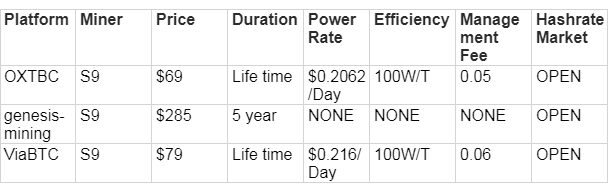
Following are the data comparison among the major mainstream platform:
OXTBC: Top Cloud Mining Platform
Since the early of establishment in 2015, the cloud mining platform at the same period almost failed, sold out or escaped. However, OXTBC not only survives but also still normally operates. Depending on the low electricity fee advantages and the professional large-scaled mining farm, it has been providing stable contract profits for users during these consecutive 3 years.
The managed contracts of cloud mining were firstly created in 2017 to ensure the opening and transparency of issuing the profits of hashrate. Users can sign in the official website to check the profits details of each day anytime. Comparing to other platforms, OXTBC provides the low-barrier purchasing channel and the lowest one of bitcoin cloud mining is 1THS (it means that if a mining rig of S9 is segmented into 14 pieces, then users can contribute to 1/14 hashrate.) The lowest of Ethernet computing power is 1MHS so that everybody can get the chance to join in mining to decrease the centralization trend. Moreover, OXTBC has great advantages on selling price, power rate and management charge and still offer more profits room to users by selling at the lowest rate among the whole platforms.
Tuesday, June 19, 2018
Ethereum Mining, GPU Mining Rig Is Still Strong
Bitmain released the brand new Antminer E3 in overseas markets — an upgrade of Ethereum miner which is very likely to lead to losses for existing miners. The price of E3 has risen fast since it’s released. The so-called ASIC Ethereum miner failed the high expectation in terms of higher hashrate and less power consumption, and it’s performance is way worse than ASIC miners.
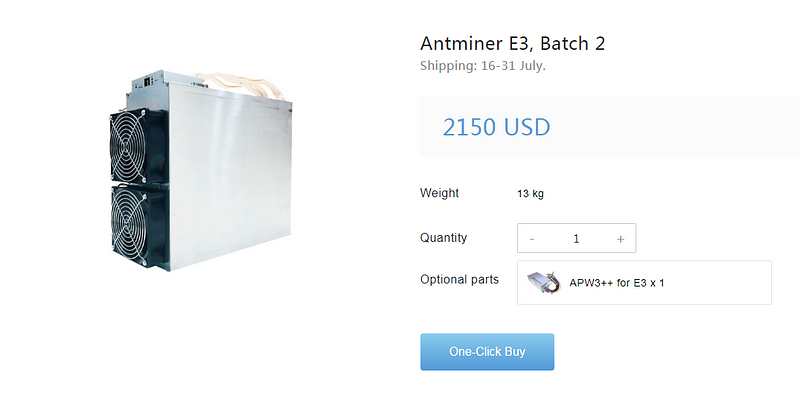
Why doesn’t E3 have obvious advantages? Let’s make a comparison between E3 and PandaMiner B3 Pro, which is currently the most powerful GPU integrated miner in the market. Of course you can put your own graphics card machine in the comparison too:
Cost
As Antminer E3 is an ASIC miner, it is impossible for it to weigh of 13KG. And it is very likely that it’s installed with 6 chips built-in graphics cards. It is worth noting that Antminer E3 for this batch only supports overseas shipping. According to the logistics partner UPS, the minimum shipments cost for one unit is around $150. Plus an official power supply of $105 yuan, the total unit cost will reach as high as $2405, or $13 for each MHS.

While PandaMiner B3 Pro is integrated with AMD RX470 4G graphics cards, and the market price of 8 graphics cards is around $2158. Added with power supply, motherboard, chassis and other parts, the total costs is quite transparent.
ModelRetail PricePower SupplyShipping CostTotal CostHashrateMhs CostAntminer E3$2150$105$150$2405180MHS$13.36/MHSPandaMiner B3 Pro$2508$0$0$2508220MHS$11.4/MHS
By contrast, costs to get an E3 are even higher due to limited supply, and it’s not hard to imagine that miners will choose the most competitive product. Not only the cost of purchase, delivery time is also another important aspect.
Delivery
The delivery for B3 only takes 7 working days. However, it is expected to make delivery in July for E3, meaning still 3 months to go. With such a long waiting period, B3 totally will win over E3 in profits. Check the current profit ratio as follows:
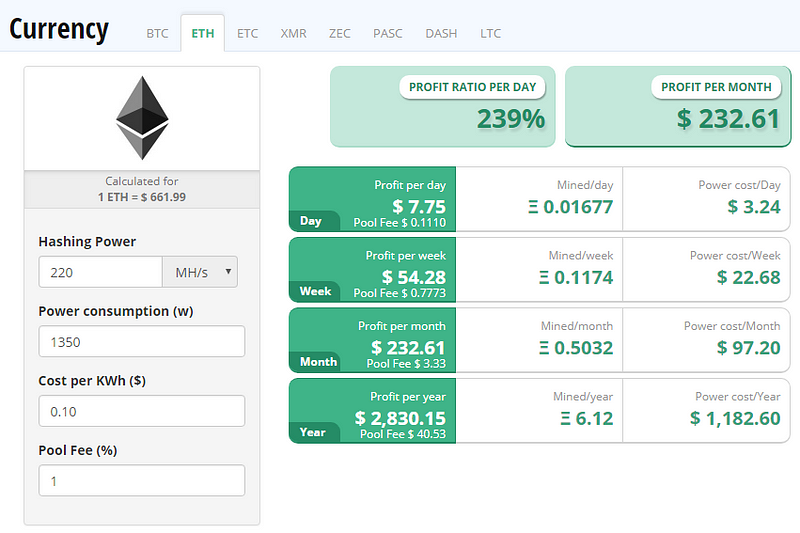
And what will happen in three months is clear to everyone — 3 months loss of time and efficiency. Miners don’t want to waste their time which equals to mining profits.
Specifications
Antminer E3 runs 180 MHS hashpower for ETH mining, similar to all miners running 6 graphic cards. PandaMiner B3 Pro runs 220 MHS on the other hand, and the power consumption is basically 1300W. The difference in power consumption is not significant with the same hashrate, so E3 does not have a win either in power consumption.
Scrap Value
Now let’s compare the residual value of both miners. PandaMiner B3 Pro is a GPU integrated miner with a normal display output. The price of second-hand graphics cards in the market is still considerable. While an E3 can maintain after being obsolete as it is ASIC miners designed only for mining.
In summary, GPU mining is still strong and more adaptable to the market, and the price of Antminer E3 is not at all competitive for mining. The majority of miners can continue to stick to GPU mining. Compared with ASIC miners pegged to certain coins, GPU mining is more feasible and can stand the test of the market in the long run. Another major threat to E3 is that Ethereum is able to resist the ASIC miner through hard fork, if ti’s supported by the Ethereum community.
Altcoins mining
GPU miners support a lot of altcoins, as follows. Generally speaking, GPU miner is more flexible and can quickly switch coin types according to profitability. The current higher-yielding coins are ETH, XMR, ZEC and so on, and miners can choose their coin types based on their preference. After all, the cryptocurrency development changes too fast. Perhaps one of the following will become a potential black horse.
AlgorithmsCoinEthashETH//ETC/ELLA/ETP/ETFGroestlGRSX11GostSIBCryptoNightXMR/ETN/XDNEquihashZEC/BTG/BPALyra2REv2XVG/MONANeoScryptFTC/VIVOBlake(14r)DCRPascalPASLNIST5BWKXevanBSDX14HSRX13sm3BCD
About PandaMiner:
PandaMiner is a professional cryptocurrency hardware R&D technology company. With strong technology and R&D strength, PandaMiner stands out in the field of graphics card mining, and successfully produces stable integrated graphic card miners with high performance and low power consumption. PandaMiner has units that make miner R&D, cloud mining, miner hosting, mining pool, almost covers the entire cryptocurrency mining industry chain. Our vision is to perfect our products to meet the demands of the ever-growing mining industry and make mining simple.
For more details, please click official website: https://pandaminer.com/.
Tuesday, January 9, 2018
5G Network Brings New Opportunity to Optical Communication
At present, 5G is in the crucial stage of the formation of technical
standards. Major countries and operators in the world have started the 5G test
in succession and successively issued strategic plans to carry out industrial
layout and seize strategic high ground. China is also actively promoting the 5G
technology research and industrialization, 5G technology research and
development testing, international standardization support continue to make new
progress. Recently, more than three major operators 5G infrastructure, total
spending within seven years will reach 180 billion U.S. dollars heavy news came
out, the 5G topic to an unprecedented peak.

As we all know, the future of 5G depends on small base stations.
When the coverage of base stations is getting smaller and smaller, the number of
base stations will increase exponentially. Taking the example of 3.5GHz, the
number of base stations of 3.5GHz is more than the number of base stations of
800MHz and 1.8GHz Doubles. If it is planned more than 6GHz, the number of base
stations will be more. If it is planned to 26GHz above, it does not know it
will reach how many times. Therefore, a substantial increase in the number of
base stations is an inevitable result, and the interconnection between base
stations requires a lot of fiber. It is reported that at present, the number of
base stations in China has reached more than 5 million, while the future
development of 5G, conservative forecasts will reach 10 million or more, if the
high-band, or even more.
Obviously, optical communication and 5G have met by chance.
Accordingly, what is the impact of 5G on optical communications? The
opportunities that 5G brings to optical communication are mainly including
three parts: optical fibers, optical transceivers and optical network.
1. First, optical fiber is the first beneficiary. 5G band is high
and the number of base stations may be 2-3 times. If following the full
coverage requirements, according to Fiber Broadband Association estimates, 5G
fiber usage will be 16 times more than 4G. Consider China's 4G base station
density is very high, the urban area only a few hundred meters spacing, it is
estimated that the amount of 5G fiber is 4G 2-3 times.
2. Second, optical transceiver module is the second beneficiary.
Assuming that the 5G base station is 2-3 times as much as 4G, considering the
medium / backhaul module, it is expected to bring tens of millions of 25GHz
high-speed optical module usage. 5G flat architecture to the traditional huge
capacity and cost pressures, which requires a large number of optical transceivers
to support.
3. Moreover, high-speed optical access network systems and optical
devices are the third beneficiaries. The 5G architecture enables several
decades of backhaul / midamble / preamble capacity up to tens of hundreds of
Gbps levels and requires the introduction of 25G / 50G based CWDM or WDM for
tunable lasers, tunable filters and CWDM / WDM devices High cost performance
requirements; for TWDM PON systems, the demand for eCPRI and even edge ROADM
systems is likely to increase significantly.
To sum up, we are currently at the pinnacle of opportunities and
challenges in the 5G era. As the leading optical communications industry and
optical component manufacturer in the 5G era, Gigalight has been closely following the market and moving ahead of 2016 in
preparation for the beginning of 5G optical device product lines. At present, Gigalight
owns a complete line of professional optical modules and other products. In
particular, a large number of high-speed new products are launched in last year:
100G QSFP28 CWDM4, 100G QSFP28 PSM4, and 200G QSFP DD SR8.
Wednesday, December 20, 2017
Differences between QSFP28 PSM4, QSFP28 SR4 and QSFP28 LR4
The appearance of the QSFP28 optical
transceiver is the same as that of the 40G QSFP + optical transceiver. The
difference is that QSFP28 optical transceiver can transmit optical signals up
to 100G. Therefore, QSFP28 optical transceiver has become the mainstream 100G optical
transceiver and the preferred solution for network upgrade of 100G. This
article describes the differences between the QSFP28 PSM4 optical transceiver,
the QSFP28 SR4 optical transceiver, and the QSFP28 LR4 optical transceiver.
The Definition of Different Types of QSFP28
Optical Transceiver:
QSFP28 PSM4 optical
transceiver is a high-speed, low-power product with a hot-swappable QSFP
form factor with built-in digital diagnostics and eight optical fibers, each
with a data rate of 25Gbps.
QSFP28 SR4 optical transceiver is a
parallel 100G optical transceiver with the advantages of high port density and
low cost. If you need a short distance transmission of optical transceivers for
100G network upgrade, you can choose QSFP28 SR4 optical transceiver.
QSFP28 LR4 optical transceiver, an optical
transceiver with transmission distances up to 2km, provide an ideal solution
for the ever-increasing transmission distance requirements of very large data
centers and will lead the use of single-mode optical fibers in the data center.
QSFP28 Optical transceiver Differences:
1. Transmission Methods
As we all know, QSFP28 optical transceiver
usually has four transmission channels, and each channel data rate is 25Gbp. This
transmission is very similar with 40G QSFP + optical transceiver transmission. 100G QSFP28 SR4 and 100G
QSFP28 PSM4 optical transceivers are 12-way MTP interface, while the
realization of the 8-way fiber 100G transmission is bidirectional. But the 100G
QSFP28 LR4 optical transceivers cannot do this, QSFP28 LR4 optical transceiver
is transmitted at the same time in two uses of LC duplex fiber in one direction
for 100G transmission.
2. Transmission Media and Transmission Distance
QSFP28 PSM4 optical transceiver, QSFP28 SR4
optical transceiver and QSFP28 LR4 optical transceiver transmission distance
are also different. QSFP28 SR4 optical transceiver operates at 850nm and is
used with OM3 or OM4 multimode fibers for transmission distances of up to 70m
with OM3 fibers and up to 100m with OM4 fibers. QSFP28 LR4 optical transceiver
is usually used with single-mode fiber, which operates at 1310 nm and has a
maximum transmission distance of up to 2km. QSFP28 PSM4 optical transceiver, is
generally used with a 12-way MTP interface and single-mode optical fiber with a
transmission distance of up to 500m.
3. The Wiring Structure Is Different
Optical transceiver transmission in the
optical fiber routing has a very important role. Because the QSFP28 SR4 optical
transceiver and the QSFP28 LR4 optical transceiver are used for short-distance
transmission and long-distance transmission respectively, their wiring
structures are different. The former requires multi-fiber cabling based on a
12-way MMF MTP interface, while the latter requires only a traditional
two-fiber SMF cabling. In this case, the conversion between multimode fiber and
single-mode fiber is very complicated because they use a completely different
wiring structure.
Although QSFP28 PSM4 optical transceiver
operates in single-mode fiber, its wiring structure is the same as that of the
QSFP28 SR4 optical transceiver. Using the QSFP28 PSM4 optical transceiver saves
conversion costs between multimode and single-mode without changing existing
cabling structures.
4. Different Working Principle
(1) How QSFP28 PSM4 optical transceiver
works:
The working principle of the QSFP28 PSM4 optical
transceiver is almost the same as that of the QSFP28 SR4 optical transceiver.
The difference is that the QSFP28 PSM4 optical transceiver operates on single-mode
fiber while the QSFP28 SR4 optical transceiver operates on OM4 multimode fiber.
(2) How QSFP28 SR4 optical transceiver
works:
QSFP28 SR4 optical transceiver transmits
signals at the transmitting end; the electrical signals are converted into
optical signals by the laser array and then transmitted in parallel on the
ribbon multimode fiber. Upon reaching the receiving termination, the photo
detector array converts the parallel optical signals into parallel electrical
signals.
(3)How QSFP28 LR4 optical
transceiver works:
QSFP28 LR4 optical transceivers are
typically used with LC single-mode fiber optic cables to convert 4×25Gbps electrical signals into 4 LAN WDM optical signals and then
multiplexed into a single channel for 100G optical transmission. At the
receiving end, the module demultiplexes the 100G optical inputs into 4 LAN WDM
optical signals, and then converts them into 4 channels of electrical signal
output.
An Introduction to 100G QSFP28 Optical Module and Its Advantages
After the optical module data rate, the development
of optical module form factor, the market there are a variety of optical
modules and a variety of packages, then QSFP28 optical
module now appears, it has some advantages that can help become the
mainstream of 100G optical networks. Below, we will introduce to everyone what
is QSFP28 optical module and what are the advantages of QSFP28 optical module.
What Is QSFP28 Optical Module?
First, let's look first: What is QSFP28
optical module. Generally speaking, the optical module form factor refers to
the optical module shape, with the progress of science and technology, optical
module form factor is a step by step evolution, the volume is gradually smaller,
of course, not only the appearance of the change in the rate, power
consumption, distance , costs, etc. are also constantly moving forward.
Currently 100G optical modules have several
main form factors, including: QSFP28 optical module, CFP optical module, CFP2
optical module, CFP4 optical module, these kinds of encapsulated optical
modules all belong to 100G, of which the QSFP28 optical module is a mainstream
100G optical module on the current market.
The post will compare 100G QSFP28 optical
module and other 100G optical modules in terms of port density, power
consumption, and cost respectively.
What Are the Advantages of QSFP28 Optical
Module?
1. Port Density
The first generation of 100G optical
modules was a very large CFP optical module, and then CFP2 and CFP4 optical
modules were launched, among which CFP4 optical module was the latest
generation of 100G optical modules and had a width of only 1/4 of the CFP
optical modules. However, the form factor of 100G QSFP28 optical module is
smaller than the CFP4 optical module, which means the 100G QSFP28 optical
module has a higher port density on the switch.
2. Power Consumption
The power consumption of 100G QSFP28
optical module is usually lower than 3.5W while that of other 100G optical
modules is usually between 6W and 24W. From this, 100G QSFP28 optical modules
have much lower power consumption than other 100G optical modules.
3. Cost
Now the data center is mainly 10G network
architecture, in which the interconnection solution is mainly 10GBASE-SR
optical module and duplex LC multimode fiber jumper. If the existing 10G
network architecture can be directly upgraded to 40 / 100G networks, it will
save a lot of time and cost.
Although 100G QSFP28 optical modules have
many advantages, it is only one of many solutions for 100G network. For data
centers and server rooms, suit is best. Therefore, other 100G optical modules
also have a place in the 100G network. Gigalight thinks that 100G QSFP28
optical module series, like 100G QSFP28 SR4, 100G QSFP28 LR4, 100G QSFP28 CWDM4 and
100G QSFP28 PSM4, have brought a new solution for 100G applications that will
promote the faster development of 100G.
Monday, November 20, 2017
QSFP-DD (Double Density QSFP): Something You Want to Know
With the rapid growth of data center and 5G development, density, power limits in servers, switches, and other network equipment are being pushed by rising demand and data volume. Data center is required to support faster processing, more bandwidth, and increased density without sacrificing reliability. In this situation, QSFP-DD came out, which is a new module and cage/connector system similar to current QSFP, but with an additional row of contacts providing for an eight lane electrical interface. In this article, we will introduce you something about QSFP-DD that you may be interested in.
QSFP-DD MSA Group participants have developed an improved management interface. The MSA project may split into separate management interface and form-factor documents. There is a possibility that the OSFP MSA Group, the uQSFP MSA Group, and the Consortium for On-Board Optics (COBO) will adopt the improved QSFP-DD management interface.
The QSFP-DD is similar to the current QSFP, but there are still some differences. If modulated by NEZ, each lane of the QSFP-DD can support data rate up to 25G, thus, it can support a total data rate of 200G. If modulated by PAM4, QSFP-DD transceiver can support data rate up to 400G with each lane supporting data rate of 50G. The MSA group also announced that the QSFP-DD can enable up to 14.4Tbps aggregate bandwidth in a single switch slot, which can definitely satisfy the increasing need for higher bandwidth.
1. What Is QSFP-DD?
QSFP-DD stands for Quad Small Form Factor Pluggable Double Density. What Double Density means? The “double density” means the doubling of the number of high-speed electrical interfaces that the module supports compared with a standard QSFP28 module. QSFP-DD is a “double-density” module and cage/connector system which is similar to the current QSFP system. But QSFP-DD has an additional row of contacts providing for an eight-lane electrical interface. The new optical module will be able to operate 25 Gb/s NRZ modulation or 50 Gb/s PAM4 modulation over 16 pairs of twinaxial conductors or optical fibers to support 200 Gb/s or 400 Gb/s aggregate bandwidth.2. An Introduction on QSFP-DD MSA Group
QSFP-DD Specification for QSFP Double Density 8X Pluggable Transceiver is currently under development by the QSFP-DD MSA Group. The group includes 13 members which are all the leading vendors in the optical communication industry, like Cisco, Brocade and Finisar, aiming to create a upgraded version of QSFP transceiver, which is called QSFP-DD and is able to support 200G/400G Ethernet.QSFP-DD MSA Group participants have developed an improved management interface. The MSA project may split into separate management interface and form-factor documents. There is a possibility that the OSFP MSA Group, the uQSFP MSA Group, and the Consortium for On-Board Optics (COBO) will adopt the improved QSFP-DD management interface.
3. QSFP-DD vs. QSFP28
QSFP28, with increased data rates ranging up to 28 Gbps on each of four lanes, supports next-generation 100 Gbps Ethernet and 100 Gbps InfiniBand. Now it is quite popular in datacenter computing, switches, routers, and storage. With enhanced Data Rate applications, the QSFP28 interconnect transmits up to 25 Gbps per-serial lane data rates with excellent signal integrity, EMI protection, and thermal cooling.The QSFP-DD is similar to the current QSFP, but there are still some differences. If modulated by NEZ, each lane of the QSFP-DD can support data rate up to 25G, thus, it can support a total data rate of 200G. If modulated by PAM4, QSFP-DD transceiver can support data rate up to 400G with each lane supporting data rate of 50G. The MSA group also announced that the QSFP-DD can enable up to 14.4Tbps aggregate bandwidth in a single switch slot, which can definitely satisfy the increasing need for higher bandwidth.
4. 200G QSFP-DD
To achieve 400 Gbps, the interconnect industry is developing next-generation Quad Small Form Factor Pluggable Double Density (QSFP-DD) modules. And Gigalight also took the opportunity to release out the new 200G QSFP-DD in this summer. The 200G QSFP-DD integrates eight data lanes in each direction with 8x25.78125Gbps bandwidth. Each lane can operate at 25.78125Gbps up to 70m by using OM3 fiber or 100 m using OM4 fiber. The module is designed to operate over multimode fiber systems using a nominal wavelength of 850nm. It is a high performance module for short-range multi-lane data communication and interconnection applications. It is four-Channel, pluggable, parallel, fiber-optic QSFP+ SR4 for 100 or 40 Gigabit Ethernet, Infiniband FDR/EDR and applications. This transceiver is a high performance module for short-range multi-lane data communication and interconnects applications.Conclusion
The QSFP-DD optical transceiver is also forward/backward compatible with QSFP, QSFP28 optical transceiver, AOC/DAC and so on. We believe that the rapid development of QSFP-DD will greatly benefit on the whole optical interconnect and communication industry. Let’s wait and see what will happen in the future.Friday, November 3, 2017
CWDM and DWDM Comparison: What’s the Difference?
DWDM (Dense Wavelength Division Multiplexing) is undoubtedly the popular technology in today's optical fiber applications. However, because of its expensive price, many operators without enough money are quite hesitated to use it. Can we use wavelength division multiplexing at a lower cost? Faced with this demand, CWDM (Coarse Wavelength Division Multiplexing) came into being. And in the post, we will take an introduction on the main difference between CWDM and DWDM and which one is your better choice.

CWDM, as the name suggests, is a DWDM close relative. When comparing CWDM vs. DWDM, their differences are mainly two points as follows:
1. CWDM carrier channel spacing is wide, so the same fiber can only reuse 5 to 6 or so wavelength. This is why we call “Dense” and “Coarse”.
2. CWDM modulates laser by using non-cooling laser, but DWDM is used to cooling laser. The cooled laser is thermally tuned and the non-cooled laser is electronically tuned. Since the temperature distribution is very uneven in a wide wavelength range, the temperature tuning is difficult and costly to achieve. CWDM avoids this difficulty, therefore the cost is significantly reduced, the entire cost of CWDM system is only 30% of DWDM.
CWDM provides very high access bandwidth for low cost, and is suitable for popular network structures such as point-to-point, Ethernet, SONET ring, especially for short distance, high bandwidth, and point-intensive communication applications. Building communication between buildings or buildings. In particular, it is worth mentioning that CWDM and PON (passive optical network) with the use. PON is an inexpensive, point-to-multipoint optical fiber communication method. By combining with CWDM, each individual wavelength channel can be used as the virtual optical link of PON to realize the broadband data transmission between the central node and multiple distributed nodes.
At present, several companies are introducing CWDM-related products. Here we mainly introduce CWDM Mux/Demux and DWDM Mux/Demux.
(1). CWDM Mux/Demux Module:
CWDM Mux and CWDM Demux are designed to multiplex multiple CWDM channels into one or two fibers. The core of CWDM Module application is the passive MUX DEMUX unit. The common configuration is 1×4, 1×8, 1×16 channels. Available in 19″ Rack Mount or LGX module package, optional wide band port is available to multiplex with CWDM Channels wavelength.
(2). DWDM Mux/Demux Module:
DWDM Mux and DWDM DeMux are designed to multiplex multiple DWDM channels into one or two fibers. The common configuration is 4, 8, 16 and 40 channels. These modules passively multiplex the optical signal outputs from 4 or more electronic devices, send them over a single optical fiber and then de-multiplex the signals into separate, distinct signals for input into electronic devices at the other end of the fiber optic link.
However, CWDM is the product of cost and performance compromise; inevitably there are some limitations on performance. Industry experts pointed out that CWDM currently exist below the following four points: First, CWDM in a single fiber to support the number of multiplex wavelengths less, resulting in higher cost of expansion in the future; second, multiplexers, multiplexers, etc. The cost of the equipment should be further reduced, these devices can not only DWDM corresponding equipment, a simple modification; Third, CWDM does not apply to metropolitan area networks, metro nodes between the shorter distance, operators in the CWDM equipment expansion on the money can Used to lay more fiber optic cable, get better results; Fourth, CWDM has not yet formed a standard.
From the CWDM and DWDM comparison above, we can know both the benefits and drawbacks of CWDM and DWDM. If the transmission distance is short and cost is low, then CWDM may be your first choice. On the contrary, you can consider DWDM. For more information about CWDM and DWDM, you can visit: Gigalight.

CWDM, as the name suggests, is a DWDM close relative. When comparing CWDM vs. DWDM, their differences are mainly two points as follows:
1. CWDM carrier channel spacing is wide, so the same fiber can only reuse 5 to 6 or so wavelength. This is why we call “Dense” and “Coarse”.
2. CWDM modulates laser by using non-cooling laser, but DWDM is used to cooling laser. The cooled laser is thermally tuned and the non-cooled laser is electronically tuned. Since the temperature distribution is very uneven in a wide wavelength range, the temperature tuning is difficult and costly to achieve. CWDM avoids this difficulty, therefore the cost is significantly reduced, the entire cost of CWDM system is only 30% of DWDM.
CWDM provides very high access bandwidth for low cost, and is suitable for popular network structures such as point-to-point, Ethernet, SONET ring, especially for short distance, high bandwidth, and point-intensive communication applications. Building communication between buildings or buildings. In particular, it is worth mentioning that CWDM and PON (passive optical network) with the use. PON is an inexpensive, point-to-multipoint optical fiber communication method. By combining with CWDM, each individual wavelength channel can be used as the virtual optical link of PON to realize the broadband data transmission between the central node and multiple distributed nodes.
At present, several companies are introducing CWDM-related products. Here we mainly introduce CWDM Mux/Demux and DWDM Mux/Demux.
(1). CWDM Mux/Demux Module:
CWDM Mux and CWDM Demux are designed to multiplex multiple CWDM channels into one or two fibers. The core of CWDM Module application is the passive MUX DEMUX unit. The common configuration is 1×4, 1×8, 1×16 channels. Available in 19″ Rack Mount or LGX module package, optional wide band port is available to multiplex with CWDM Channels wavelength.
(2). DWDM Mux/Demux Module:
DWDM Mux and DWDM DeMux are designed to multiplex multiple DWDM channels into one or two fibers. The common configuration is 4, 8, 16 and 40 channels. These modules passively multiplex the optical signal outputs from 4 or more electronic devices, send them over a single optical fiber and then de-multiplex the signals into separate, distinct signals for input into electronic devices at the other end of the fiber optic link.
However, CWDM is the product of cost and performance compromise; inevitably there are some limitations on performance. Industry experts pointed out that CWDM currently exist below the following four points: First, CWDM in a single fiber to support the number of multiplex wavelengths less, resulting in higher cost of expansion in the future; second, multiplexers, multiplexers, etc. The cost of the equipment should be further reduced, these devices can not only DWDM corresponding equipment, a simple modification; Third, CWDM does not apply to metropolitan area networks, metro nodes between the shorter distance, operators in the CWDM equipment expansion on the money can Used to lay more fiber optic cable, get better results; Fourth, CWDM has not yet formed a standard.
From the CWDM and DWDM comparison above, we can know both the benefits and drawbacks of CWDM and DWDM. If the transmission distance is short and cost is low, then CWDM may be your first choice. On the contrary, you can consider DWDM. For more information about CWDM and DWDM, you can visit: Gigalight.
Subscribe to:
Posts (Atom)